Understanding the Corrosion Resistance of Galvanized Square Steel
Release time:2025-12-30 Click:33
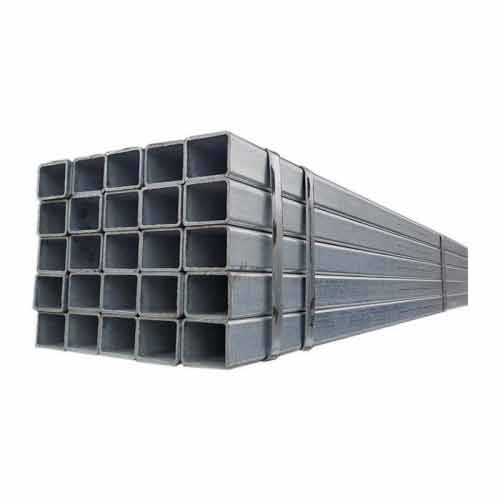
Galvanized square steel’s resilience lies in zinc’s sacrificial protection mechanism. The zinc coating (typically 50–100g/m2) oxidizes before the underlying steel when exposed to moisture, forming a protective layer of zinc carbonate. This process stops corrosion propagation even if the coating is scratched—a phenomenon called cathodic protection.
Environmental factors dictate longevity: in coastal zones (high chloride), zinc depletes 3x faster than in inland areas. But the galvanizing process matters more: hot-dip galvanizing (zinc bath at 450°C) creates a zinc-iron alloy layer (15–30μm thick) that bonds permanently to steel, versus electroplating (5μm) which flakes off.
Structural integrity is preserved through zinc layer thickness. A 75g/m2 coating (standard for structural beams) lasts 20+ years in moderate climates, while 50g/m2 (common in roofing) lasts 12 years. Crucially, the zinc layer self-repairs minor scratches via zinc migration—no need for sealants.
This isn’t just rust resistance—it’s active material science. Galvanized steel’s corrosion rate is 1/10th of untreated steel, making it ideal for bridges, towers, and infrastructure where maintenance access is difficult. The zinc doesn’t just protect; it renews.
Previous article:Galvanized Square Steel Rack - Storage & Display Solutions
Next article:Uniform Thickness Galvanized Square Steel Bar with Smooth Edges
Hot products
Mobile: +86 15097722953
Email:metalproducts2021@163.com
Email:1755383270@qq.com