The Engineering Advantages of Rectangular Steel Pipe in Construction and Manufacturing
Release time:2026-01-19 Click:26
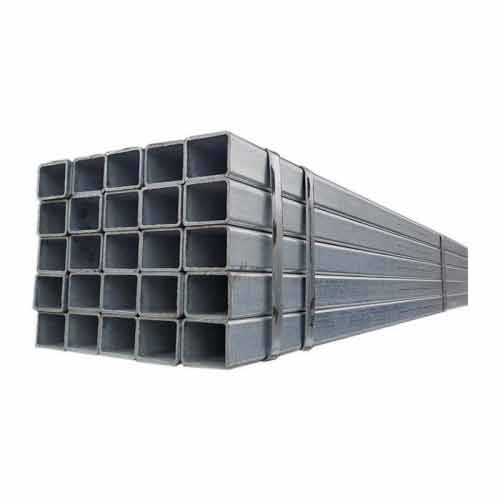
Rectangular steel pipe stands as a cornerstone of modern structural engineering, offering superior load-bearing capacity, torsional rigidity, and dimensional stability compared to round or square profiles, making it ideal for applications ranging from building frames and bridge supports to machinery enclosures and conveyor systems. Fabricated through cold-forming or hot-rolling processes, these hollow sections exhibit uniform wall thickness and precise corner radii that enhance weldability, bolted joint integrity, and aesthetic finish—critical factors in architectural facades, industrial platforms, and seismic-resistant structures. Their rectangular geometry maximizes moment of inertia along both axes, allowing engineers to optimize material usage while minimizing deflection under dynamic loads.
Material specification and fabrication techniques determine the performance envelope of rectangular steel pipe systems. High-strength low-alloy (HSLA) grades such as ASTM A500 or EN 10210 provide enhanced yield strength and ductility for heavy-duty applications like crane booms or offshore platforms, while galvanized or powder-coated finishes protect against corrosion in harsh environments including coastal zones or chemical plants. CNC plasma cutting and robotic welding ensure micron-level precision for complex assemblies, enabling modular construction methods that reduce on-site labor and accelerate project timelines. In retrofitting scenarios, pre-drilled connection plates and standardized dimensions facilitate seamless integration with existing structural elements.
Maintenance efficiency and lifecycle economics define the long-term value of rectangular steel pipe installations. Regular visual inspections for rust, deformation, or weld cracking are sufficient in most cases, with protective coatings extending service life beyond 30 years in non-aggressive environments. In high-vibration zones like manufacturing floors or transportation hubs, vibration-damping brackets mitigate fatigue failure risks. As Building Information Modeling (BIM) and digital twin technologies integrate with fabrication workflows, rectangular steel pipe continues to serve as the intelligent framework for next-generation infrastructure—balancing strength, cost-efficiency, and design flexibility through geometric optimization and advanced metallurgy.
Previous article:Square Pipe Usage in Structural Framing and Architectural Design
Next article:Structural Galvanized Square Steel: Corrosion-Resistant & Load-Bearing
Hot products
Mobile: +86 15097722953
Email:metalproducts2021@163.com
Email:1755383270@qq.com