Product details description
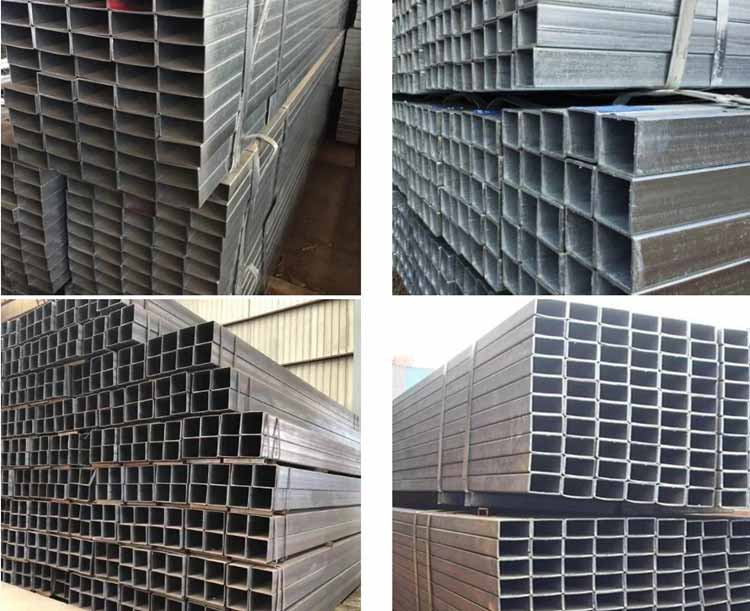
Hot-dip galvanized square tubes are available in wet, dry, lead-zinc and redox methods. The main difference between different hot dip galvanizing methods is in the method of activating the surface of the tube body to improve the quality of galvanization after the acid dip cleaning of the steel tube. The dry and redox methods are now mainly used in production and their characteristics are shown in the table. The zinc surface of electro-galvanising is very smooth and dense with a uniform organisation; it has good mechanical properties and corrosion resistance; and the zinc consumption is 60% to 75% lower than that of hot-dip galvanising. Zinc plating is technically complex, but it is used for single-sided plating, double-sided plating with different thicknesses on the inner and outer surfaces, as well as for galvanising thin-walled pipes.
Galvanisation offers greater protection and corrosion resistance. The entire structure is made up of zinc, which forms a dense quaternary crystal that forms a barrier on the steel sheet, thus effectively preventing the penetration of corrosion factors. The corrosion resistance comes from the strong protective function of the barrier layer of zinc. When zinc is used as sacrificial protection on cut edges, scratches and scuffed parts of the plating, it forms an insoluble oxide layer that acts as a barrier.
Previous article:
Quality Steel with High Strength Galvanized Square/Rectangular Steel Pipe for Sale
Next article:
galvanized Welded steel square pipe Rectangular Hollow Section Iron Square Steel pipes Ms SHS RHS Steel