Product details description
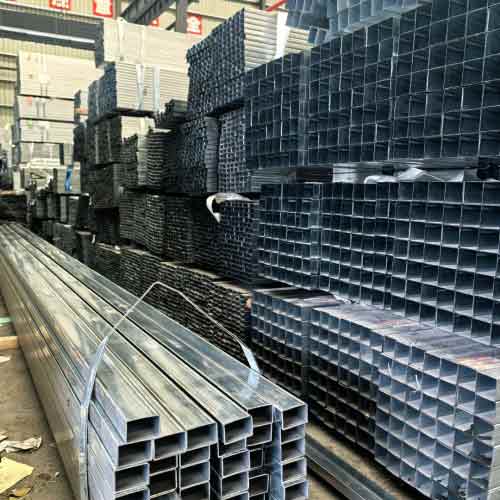
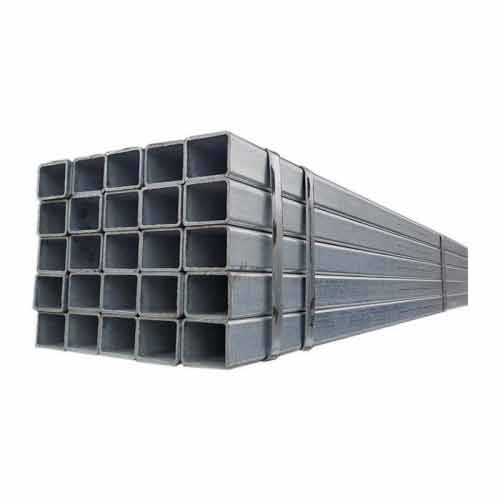
Galvanized square steel sections are widely employed in structural
frameworks for buildings, bridges, machinery bases, and fencing due to their
combination of high strength-to-weight ratio, corrosion resistance, and
dimensional stability. The galvanizing process—typically hot-dip
galvanizing—coats the steel with a metallurgically bonded zinc layer that acts
as both a physical barrier and a sacrificial anode, protecting the underlying
metal from rust even when scratched or exposed to harsh environments. This dual
protection mechanism ensures long-term durability, especially in outdoor or
industrial settings where moisture, salt, and chemical exposure are
prevalent.
Structural integrity of galvanized square steel depends heavily on precise
manufacturing tolerances, weld quality (if applicable), and adherence to
recognized standards such as ASTM A500 or EN 10219. These specifications govern
yield strength, tensile strength, elongation, and geometric consistency across
different grades (e.g., Grade C or S355). Engineers calculate load capacity
based on cross-sectional area, moment of inertia, and buckling resistance,
factoring in whether the member is subjected to compression, tension, bending,
or torsion. Proper design avoids overstressing corners or thin walls, which are
common failure points under dynamic or eccentric loading.
Load capacity varies significantly with dimensions and wall thickness. A
50x50 mm square tube with 3 mm wall thickness may support up to 15 kN in axial
compression, while a larger 100x100 mm section with 5 mm walls can handle over
60 kN. For multi-story structures or seismic zones, engineers often specify
thicker walls or reinforce connections with gussets and stiffeners to distribute
loads evenly and prevent localized deformation. Galvanized coatings also
contribute indirectly to load-bearing performance by preventing pitting
corrosion that can initiate cracks or reduce effective cross-section area over
time.
Maintenance and inspection protocols are essential to sustain structural
performance. Visual inspections should detect white rust (zinc oxide formation),
peeling coatings, or visible corrosion at weld seams or cut edges.
Non-destructive testing (NDT) methods like ultrasonic thickness gauging or
magnetic particle inspection can identify hidden flaws or wall thinning. In
aggressive environments such as marine installations or chemical plants,
periodic recoating or supplemental cathodic protection may be necessary to
extend service life beyond 20–30 years. As sustainable construction gains
prominence, galvanized square steel offers a recyclable, low-maintenance
solution that balances initial cost with lifecycle resilience.
Previous article:
Galvanized Square Steel Cutting and Fabrication Methods
Next article:
Galvanized Square Steel vs Black Steel: Corrosion Resistance Comparison